2002 Timberloch Pl, Suite 200, Spring, TX 77380

(281) 377-1203
Company Logo
Pet-Friendly Artificial Turf Installation in Spring, TX

Pet-Friendly Artificial Turf Installation in Spring, TX

Dog runs, pet areas, and high-traffic family yards in Spring and Klein — planned for drainage, built for daily use, and honest about what turf does for pet households.

Service Introduction

Comprehensive Pet-Friendly Artificial Turf Installation Scope

Dogs are hard on yards. If you have a large dog or multiple dogs in a Spring or Klein-area home, the back fence line and the gate area are probably bare dirt and ruts by now. Natural grass doesn't stand a chance against daily dog traffic on Houston clay soil, and the muddy paw prints through the house are a quality-of-life problem that most families get tired of managing. Artificial turf solves the mud problem. Artificial Turf of Spring plans pet-area installs specifically around drainage and odor management, which are the two things that determine whether a pet turf install actually works long-term.

The drainage question is the one we spend the most time on during the site visit. For pet areas, the base prep has to move liquid quickly — and that means checking grade direction, confirming the soil profile, and selecting a base depth that handles a large dog's daily impact without compacting into a drainage problem over time. Spring's clay-heavy soil in neighborhoods like Wimbledon Estates and Olde Oaks holds water naturally, so we build the base to compensate rather than assuming standard drainage will be adequate.

Infill selection for pet areas is a real decision, not a marketing add-on. Antimicrobial infill in the primary dog-use zones reduces odor and bacterial growth noticeably compared to standard silica sand infill. For households with multiple dogs or large breeds, this matters. We discuss infill options during the consultation so you understand the cost difference and the maintenance implications of each choice — some antimicrobial infills require periodic reactivation, others are passive. The right choice depends on your dog count, dog size, and how you want to maintain the space.

We install pet-area turf in dedicated dog runs along side yards, full backyard conversions for households where the whole yard is a pet zone, and mixed-use yards where the dog area and the kid area are the same space. For mixed-use yards, we plan the seam layout and infill zoning so the pet-traffic areas and the play areas are prepped differently where that makes sense.
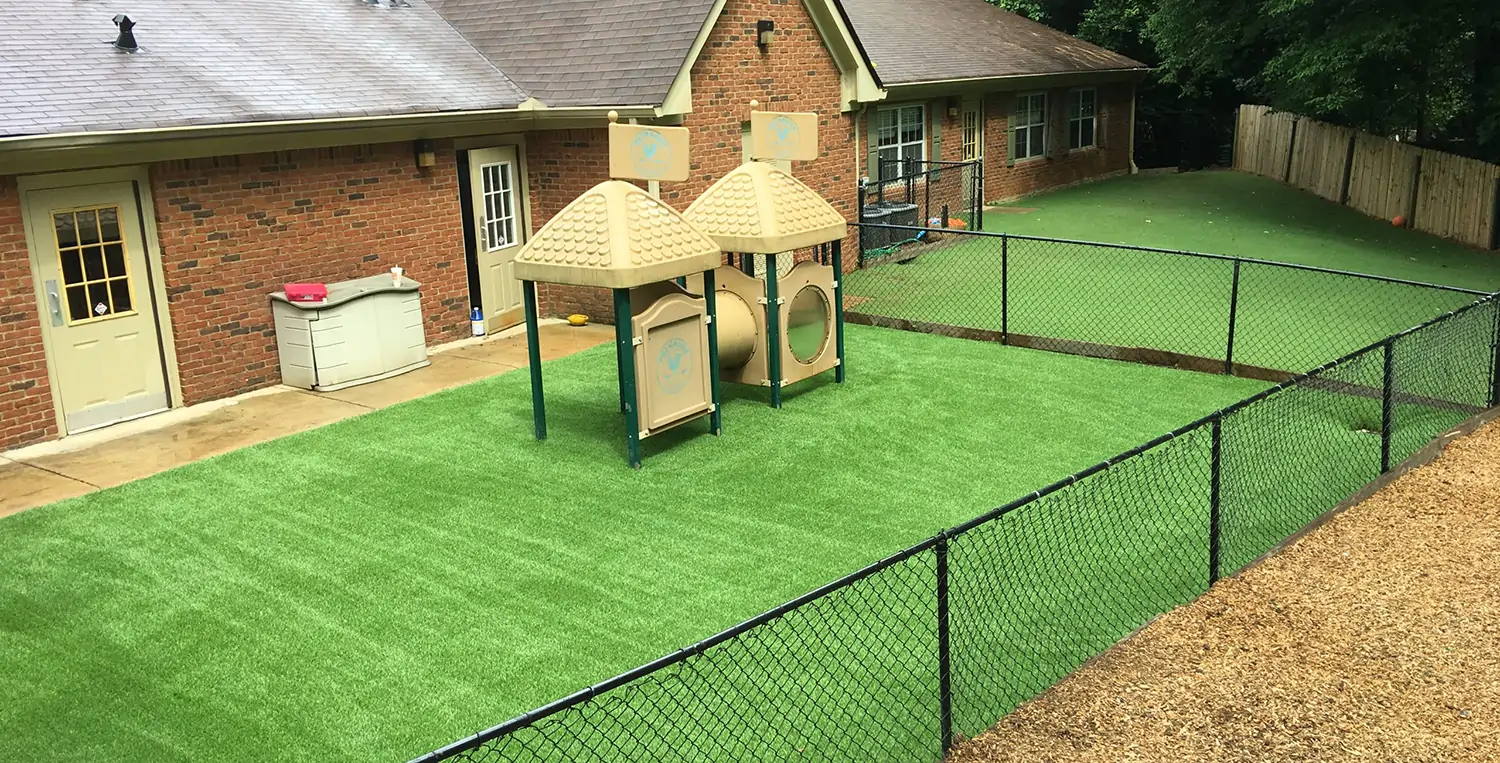
Pet-Friendly Artificial Turf Installation

What Pet-Friendly Turf Installation Includes

  • On-site drainage assessment specific to the pet-use zone, including grade direction and soil moisture characteristics.
  • Base prep designed for pet-traffic load — deeper crushed aggregate base in high-use zones compared to standard residential installs.
  • Antimicrobial infill options discussed and priced separately from standard infill so you can make an informed material choice.
  • Turf pile selection matched to pet use — medium to high face weight with adequate blade spacing for drainage between fibers.
  • Gate access and perimeter securing to ensure the pet zone is fully enclosed with no lifting at fence-line edges.
  • Drainage inspection channels or perimeter drains scoped where grade alone isn't sufficient to move liquid out of the pet zone.
  • Rinsing guidance for daily maintenance and odor management specific to the dog count and breed size in your household.
  • Infill refresh schedule recommendation at closeout based on usage intensity.

Execution Process

Step 01

Pet Zone Assessment

We look specifically at where the dogs spend time, where the mud problem is worst, how the yard drains after rain, and what the soil profile looks like under the existing surface. This determines base prep depth and infill choice.

Step 02

Drainage-First Base Prep

For pet areas, drainage base depth typically runs deeper than standard residential installs. We compact in lifts and verify drainage direction before the turf goes down.

Step 03

Turf and Infill Placement

Turf is laid with seams positioned away from the primary dog-traffic path. Infill is applied in the type and quantity selected during consultation, worked into the pile across the full zone.

Step 04

Perimeter Securing and Edge Check

All fence-line and gate edges are secured to prevent lifting. We check that the enclosure is complete — no gaps or edge lifts that a dog could nose under.

Step 05

Rinse and Handoff

We do a final rinse of the pet zone and walk you through daily maintenance: how to rinse after pet use, what to brush out after rain, and when to schedule infill replenishment.

Pet Turf Applications We Handle in Spring

Side Yard Dog Run

Narrow side-yard conversion to a fully enclosed dog run with drainage base and antimicrobial infill — the most common pet project in Spring mid-tier tract homes.

Full Backyard Pet Zone

Full backyard conversion for households where the yard is primarily a dog area and natural grass has already been eliminated by heavy use.

Mixed Use Family and Pet Yard

Yards where kids and dogs share the same space, requiring infill zoning and seam placement that accounts for both types of traffic.

Multi-Dog Household with Large Breeds

High-wear installations for households with multiple large dogs where standard base prep and infill aren't adequate — we build the base for the actual usage load.

Rental Property Pet Area

Landlord-installed pet zones at mid-tier rental properties in Spring and Klein that need to handle unknown future tenant dog use without requiring frequent replacement.

Why Pet Households in Spring Choose Us

  • We plan pet-area drainage specifically — not generically. Spring's clay soil requires deliberate base prep that standard installs don't always account for.
  • Infill options are explained honestly, including the real maintenance implications of antimicrobial versus standard infill before you commit.
  • We secure perimeter edges and gate transitions so dogs can't lift the turf at fence lines — a common installation shortcut that creates problems in high-energy dog households.
  • Scheduling works around Klein-area family routines, including keeping dogs accessible during install days.
  • We tell you realistic expectations for how the surface will look and smell after two years of heavy dog use — not the best-case scenario.

What Affects Pet Turf Install Cost

  • Square footage of the pet zone — side-yard runs are typically smaller than full backyard conversions.
  • Antimicrobial infill upcharge versus standard silica infill — we give you both prices before you decide.
  • Base prep depth — pet zones with poor grade or clay-dominant soil require more aggregate base material.
  • Whether perimeter drainage channels or edge drains are needed in addition to grade correction.
  • Whether the install is a standalone pet zone or part of a mixed-use yard that also includes a kid play area or putting green.
  • Gate and fence line access constraints that affect how efficiently the crew can stage and work.

Pet Turf Service Coverage from Spring

Artificial Turf of Spring installs pet-friendly turf throughout Spring, Klein, Tomball, Cypress eastern mid-tier, Humble, The Woodlands far-south, and surrounding neighborhoods. Pet projects are a regular part of our residential work in Olde Oaks, Wimbledon Estates, Birnham Woods, Champion Forest, and Spring Creek mid-tier.

Frequently Asked Questions

Does artificial turf actually control dog odor?

With proper base drainage and antimicrobial infill, yes — significantly better than dirt or natural grass. The drainage base removes liquid quickly rather than letting it sit in the soil, and antimicrobial infill reduces bacterial growth. It still requires periodic rinsing. We tell you what to expect honestly during the consultation.

Our yard has a low spot that floods after rain. Is turf still an option for the dog area?

It depends on how severe the low spot is. Mild grade issues can be corrected during base prep. Significant grade depression may need more intervention before turf will drain correctly. We assess this during the site visit and give you a straight answer.

What infill is best for a yard with two large dogs?

For two large dogs, we typically recommend antimicrobial infill in the primary use zone. The specific product choice depends on your budget and how much maintenance you're willing to do. We walk through the options during the consultation.

Can my dog be in the yard during installation?

We ask that pets be kept inside or in a separate area during installation. Gate access needs to be open for material staging and the yard will have equipment and loose materials during base prep. Once install is complete and the final rinse is done, pets can use the space.

How often does the infill need to be refreshed in a heavy-use pet area?

For two or more large dogs in daily use, infill inspection every 12 to 18 months is reasonable. We give you a specific recommendation at closeout based on your dog count and yard size.

Project Request

Get a Pet Turf Quote for Your Spring Home

Tell us how many dogs, approximate yard size, and whether drainage is already a problem. We'll plan a site visit and give you honest options for your specific situation.